
"The underserved are not un-deserved"
From tenants' rights advocate to Community Development Commissioner, Taniquewa Brewster's guaranteed income story

This week we’re chatting with Taniquewa Brewster, a mother, community organizer, community health worker and doula, who was recently elected to serve as the Community Development Commissioner for her zip code. A recipient of Austin's Guaranteed Income Pilot in 2022-2023, Taniquewa’s story shows how the investment expands beyond individuals to help families and communities thrive.
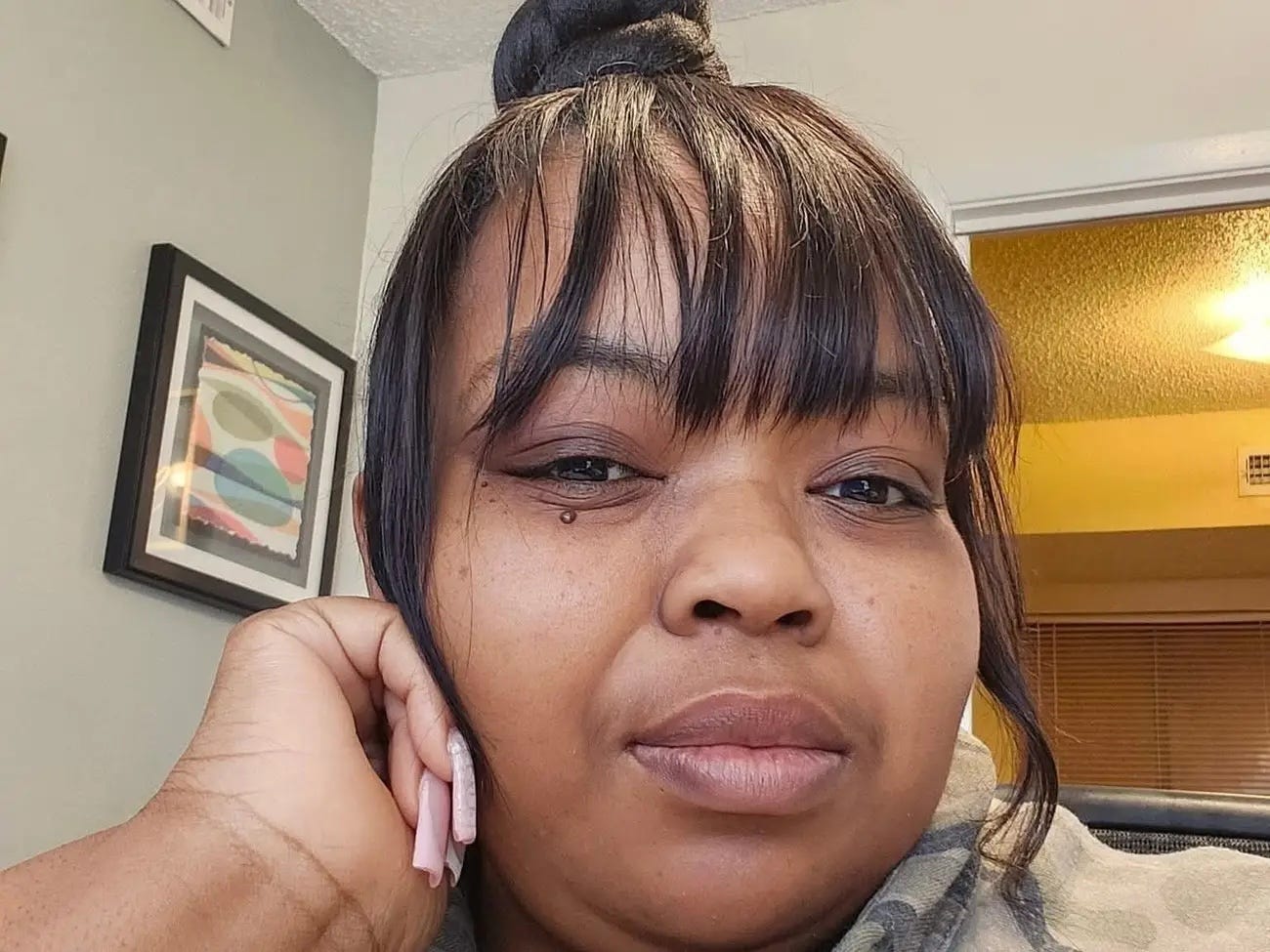
Guaranteed Income Works: Tell me a little bit about yourself, your family, and where you’re from.
Taniquewa: I’m from Austin, Texas. I’m a mother of five, and right now I’m working on adopting a younger baby. I work in the leasing industry for apartments and I’m a part of the Community Development Committee. I’m working on becoming a part of the Building and Standards Committee, so that we can hold developers accountable. There’s a lot of apartments and rental properties where tenants’ rights are not being taken care of, so I do a lot of tenant rights advocacy and land development advocacy in my area.
Historically, a lot of Black and Brown people in our area have been displaced due to environmental changes and gentrification, so working in those areas is important to me. Advocacy is very important for me. I’ve always been an advocate for the foster care program and child abuse program, but in 2021 we were displaced due to lack of gas in our complex after a winter storm, and that advocate in me was really called forth. I think that just being able to show up, whether it’s community organizing, being here for my family, being here for my community, those are the most important things to me.
Guaranteed Income Works: That’s great! So how’d you hear about the Guaranteed Income Program, and how’d you feel when you found out that you were selected?
Taniquewa: I heard about the Guaranteed Income Program because I was a part of Building and Strengthening Tenants Associations, or BASTA. It’s a nonprofit organization that works directly with tenants to help them build up their community and advocate for themselves if they’re experiencing any type of issues with landlords, or a management group, because now it’s a lot of management companies that own apartment rentals.
I had been volunteering with BASTA for about a year. We had seen a lot of significant changes in our area, and one of the volunteer coordinators gave me a call and said, “Austin is doing a Guaranteed Income Pilot Program. We want to put you out there. It’s gonna be a lottery, so we can’t guarantee you’re gonna get chosen, but we really want to put you in it. We just feel like you would be a good candidate for this.” I said okay, but I didn’t think I’d be chosen. I was like, “is this really gonna happen?” There used to be an infomercial where the guy would say, “Set it and forget it”–that’s kind how it was with my application.
When I was contacted and I was told, “You’re gonna receive $1,000 every month,” I still had doubts that it would really last for a year. I am so grateful that the pilot program actually happened, thanks to Vanessa Fuentes and a lot of the city council fighting for it, getting it into the budget, because it really changed my life. It helped restore my hope that I could break the generational curse of poverty that my family had experienced.
The best part was that I wasn’t told “this is what you can and can’t do” with the money. There’s programs, like TANF, with so much red tape. You can’t do this, you can’t do that. If you make a dollar more, you need to report that. You report that dollar, now you no longer qualify. But with the Guaranteed Income Program, it was there for me, and it helped. And so I’m always grateful for it.
Guaranteed Income Works: Most definitely. As a parent, do you feel that the Guaranteed Income Program helped you in any way?
Taniquewa: I do. It gave me time, because when we talk about poverty, we don’t talk about the time poverty that we experience as parents. We can’t always show up for our children. We can’t always be there because we’re working. We have to work. You can’t bank time, so you can’t say, “I’m gonna sleep for four hours, get up, and I’ll be well-rested, well-restored so I can go to their games, or I can go to their school field trip, or I can show up to a parent conference.” It’s hard to miss work for a parent conference, and the teachers are like, “You can’t show up?” And it’s like, “Well, I have to work because the bills are gonna show up, too.”
So one of the main things I’m always grateful for is the time that it gave me, and that time also allowed me to go back to school and get some certifications that I used to enhance my job. I am still working the same amount, but I’m making more money because of the certifications that I have. I’ve had the skills, I’ve had the knowledge, but now with that certificate, it’s on paper: she got it, she can do this. It just really helps.
Guaranteed Income Works: That actually gets into my next question. Has the guaranteed income helped you to progress in your career or unlock any opportunities?
Taniquewa: Definitely, starting with becoming an assistant property manager. Tenant advocacy is what I was always into, so I was on the other side. There was a program that opened up and luckily I had just started receiving my guaranteed income, so I was able to pay for it. I got the leasing specialist certification, and that opened opportunities for me to do better financially, and also become an advocate on the inside.
When I got into leasing, I saw that there was still a gap. There were still so many people who needed resource navigation, because I worked in affordable housing. The difference between affordable housing and conventional housing is that if you can’t make rent in conventional, they’re gonna kick you out. Affordable, we’re gonna help you find resources that can keep you in your home, and that was always important to me. I don’t wanna see anybody be evicted or end up homeless.
Homelessness is a big problem in our nation. I can’t even say just in Austin, because across the nation, homes are not affordable. People are going without food just to pay rent. That’s why working in affordable housing, learning HUD policies, helping families to stay in their home, that was always important to me. And that led to me becoming a certified notary. Some people needed documentation, so being able to sign those documents, get those taken care of, was a big help.
I also became a certified doula. During Winter Storm Yuri, we saw a lot of babies being born, and it was also during COVID, and so there was all these rules, like only one person could be in the hospital room. That’s what made me pursue becoming a doula, because not everybody has a support system. There’s single mothers, and not even just mothers–the whole family might need support. There was a couple that moved here from Tennessee who had a baby. They didn’t have any other family, and the dad was having to work. So that got me into doula work, because the support of a doula is important. Even dads need help.
Guaranteed Income Works: Do you think the guaranteed income program would have any kind of benefits or effects on today’s economy?
Taniquewa: I honestly do. I think that we’ve seen in the past how it’s helped families. So many non-believers said, “Oh, they’re gonna take this money and do X, Y, Z,” but we’ve seen so many success stories. We’ve seen so many families say, “Before I had guaranteed income, I was going through this and that. After guaranteed income, I’m in a better place. I’m doing this now. I’m moving in this new direction.”
So of course I think it can help the economy. We know how high gas is. Groceries are high. We definitely see it.
Being a part of the guaranteed income program really opened my eyes to how many people are involved and willing to help, how many are willing to invest in people. I’ve been able to meet so many people, others who also have been through the guaranteed income programs, funders, researchers… To see people, even strangers, who are saying, “use this investment, we can invest in you, and you can do better.” Not only you, that will help your family. That will help the community. It’s the ripple effect: once that family is thriving, that community is thriving, it just gets better from there.
Guaranteed Income Works: What was the biggest change you experienced coming from the guaranteed income program?
Taniquewa: I started to believe in myself more. It was more of a, “Taniquewa, you can do this. Taniquewa, you’ve been there before. You know there’s a way out.” And that’s one of the biggest things, believing in me even so far as these years later, even being able to do this interview. I was kind of nervous earlier, and I had to stop and pause and tell myself, “Taniquewa, you can do this.”
Guaranteed income gave me that confidence in myself that I don’t think I had before, because I felt judged. Every time I needed to ask for help, it felt like somebody’s gonna judge me. I might lose this or I might... It always felt like a trade-off and a gamble going to these state agencies for assistance. Not saying they’re all bad, but it’s just like, “Oh, you can get this, or we can give you that. But it’s a trade-off for this, and you can’t get that. No double dipping, no this AND that.” It’s so hard to know the rules, because the rules change every day. So it’s like, “Oh, I didn’t realize that could’ve been fraudulent.”
So the biggest thing is just that confidence in myself, and continuing the learning process. Becoming knowledgeable so that I can help others.
Guaranteed Income Works: What did you do after the program ended? Were you in a different financial position than you were before?
Taniquewa: Yes. Before the program, I wasn’t earning enough. I was working, I had full-time employment, but I wasn’t making enough. We were sharing my sister’s car, which was older. There’s a state program that will help you fix your car and give you gas cards, but the rule is that the car has to be in your name. But with the guaranteed income program, there were no questions. They weren’t like, “You’re putting gas in a car that’s not yours? No, that’s not gonna work. Oh, you’re fixing a tire? You’re getting a tune-up on a car that’s not yours?” No one was concerned about that. Everybody was like, “Use the money for what you need to use it for, and take care of what you need to take care of, and grow.”
Once the program ended, I had more tools and more certifications for better employment. I was making better money. I was able to get a car, because I needed my own transportation. And it was the motivation also. That’s another thing. I said confidence, but also motivation. You know you can make this amount of money. You’ve had this amount of money. You’ve saved some. So keep on, keep getting it.
Guaranteed Income Works: The next question is always one of my favorites as a former recipient myself. What’s your response to the critics who say guaranteed income recipients will stop working?
Taniquewa: No, guaranteed income recipients do not stop working. It actually encourages them to work more. But not overwork themselves, you know? With that $1,000, I was able to help myself and others. So what can I do with $2,000? Because if I go to a job, I can make this amount of money. And the workload is still the same. You’re still doing the same thing, or you’re doing better because you had a chance to enhance those skills, make time for going back to school.
With guaranteed income, every recipient that I’ve met is in a better position than they were in before. They’re working, they’re going to school. They’ve found some confidence in themselves to do better. They’re encouraged. So the idea that they’re gonna stop working just to receive that amount doesn’t make sense, because guess what? In their mind, they know that eventually this will end, so how will I keep up with what I’ve created, the lifestyle that I’ve created from this assistance, this hand up?
Guaranteed Income Works: Most definitely. If you could describe your life in two words before the guaranteed income program and in two words after the guaranteed income program, what would those words be?
Taniquewa: Before, I felt kind of hopeless, and I felt stuck. After guaranteed income, I feel more confident, and that hope is back. I no longer feel stuck. I feel that I understand economic mobility and how sometimes we need those pauses, we need those breaks. But I can say I felt hopeless and stuck, but now I can feel the motion, and I can feel the hope coming back.
Guaranteed Income Works: Is there anything else you would like folks to know about your story?
Taniquewa: Two things. I always have to put this in there because I want to be reminded: just because you have a community that’s underserved does not mean they don’t deserve better things. I mean, if a mother gets her nails done, someone might say, “Oh, she can get her nails done, but she can’t pay her rent.” No, that’s not the case. Sometimes she just deserves to do something good for herself. A father gets a haircut because he’s going to a job interview. “Oh, he can get a haircut for $30, but his kids…” Keep in mind that just because somebody is underserved does not mean they’re un-deserved. You never know what someone is going through. You never know how you can assist somebody with just a small investment in them, getting to know them.
Guaranteed Income Works: That’s a beautiful place to wrap up. Thank you for taking the time to talk to me.
Taniquewa: Thank you so much for having me!